Trees provide valuable greenery and character, but a damaged or unstable tree can quickly become a serious safety concern. Strong winds, heavy branches, disease, decay or root problems can cause a tree to become unstable, particularly after severe weather.
For homeowners and businesses in Horndean, Hampshire, recognising the warning signs and knowing what to do when a tree becomes hazardous can help reduce the risk of injury or property damage. Professional tree surgeons can assess the situation and determine the safest approach to emergency tree removal or other necessary work.
What Makes a Tree an Emergency Risk?
Not every damaged tree requires immediate removal. However, certain conditions indicate that urgent professional assessment is appropriate.
Signs of a potentially dangerous tree include:
- A tree that is leaning noticeably or has recently changed position
- Large branches that have split, broken or become partially detached
- Cracks or deep splits in the trunk
- Exposed, damaged or unstable roots
- Sections of the tree hanging over buildings, driveways or areas regularly used by people
- Significant storm damage
- Signs of extensive decay or structural weakness
- A tree that has partially fallen but remains supported by another tree or structure
A tree can become more dangerous when damaged sections are suspended above ground. Even apparently secure branches can move or fall unexpectedly.
What Should You Do If a Tree Becomes Unstable?
If you believe a tree poses an immediate safety risk, keep people away from the affected area. Avoid standing beneath damaged branches or attempting to climb the tree yourself.
Do not try to cut or remove large damaged sections without the appropriate experience and equipment. Cutting one part of an unstable tree can affect its balance and may cause other sections to move unexpectedly.
Instead, contact a professional tree surgeon and explain what has happened. Providing information about the tree’s condition and its location on the property can help the contractor understand the situation before attending.
Common Causes of Emergency Tree Damage
Trees can become hazardous for several reasons. Severe weather is one of the most common causes, with strong winds capable of breaking branches, splitting trunks or destabilising trees.
However, problems can also develop gradually. Fungal decay, disease, damaged roots and structural defects may weaken a tree over time. A tree that appeared healthy previously can therefore become unsafe when an existing weakness is exposed or worsens.
Regular inspections can help identify some of these issues before they develop into an emergency.
Does a Damaged Tree Always Need Removing?
Emergency tree work does not necessarily mean complete tree removal. The safest solution depends on the condition of the tree, the extent of the damage and the surrounding environment.
In some situations, selective removal of damaged branches may make the tree safe while allowing the remaining structure to be retained. In other cases, extensive damage or instability may mean that complete removal is the most appropriate option.
A professional assessment should be carried out before deciding what work is necessary.
What Happens During Emergency Tree Removal?
Emergency tree removal requires careful planning, particularly when a damaged tree is close to buildings, vehicles, gardens, roads or other structures.
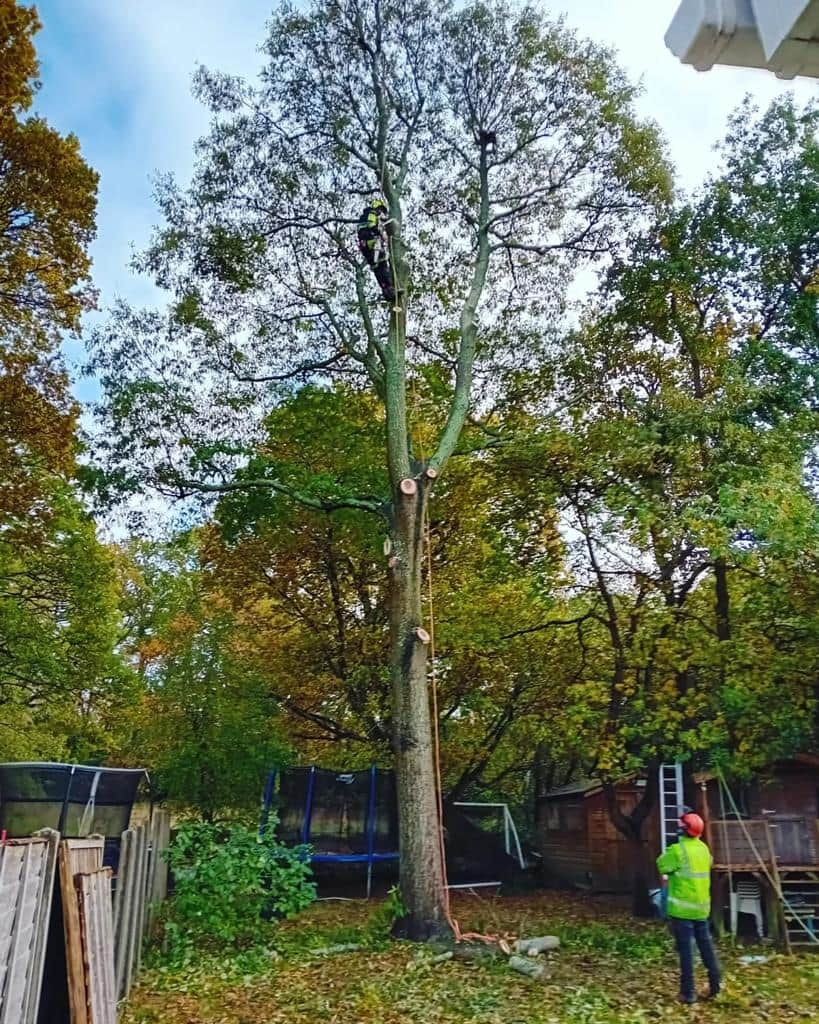
A tree surgeon will assess the tree and identify unstable sections and potential hazards. Depending on the circumstances, the tree may be dismantled in controlled sections rather than felled in one piece.
Sectional dismantling can provide greater control over where branches and sections of timber are lowered, which is particularly important where available space is limited.
Once the hazardous sections have been removed, the surrounding area can be checked for additional damage or remaining risks.
Why Professional Assessment Matters
Damaged trees can behave unpredictably. Internal decay may not be visible from ground level, while cracks, weakened unions and unstable roots can make cutting particularly hazardous.
Professional tree surgeons have the knowledge and equipment required to assess these risks and carry out controlled tree work. This can help prevent further damage while ensuring that the appropriate solution is considered rather than removing more of the tree than necessary.
Emergency Tree Removal in Horndean, Hampshire
When a tree becomes unstable, acting promptly can help reduce the risk of falling branches or further structural failure. Keep people away from the affected area, avoid attempting dangerous tree work yourself and arrange a professional assessment.
For property owners in Horndean, Hampshire, Horndean Tree Surgeons can assess damaged or hazardous trees and determine whether emergency tree removal, sectional dismantling, branch removal or another form of tree surgery is appropriate.
If you are concerned that a tree on your property has become a safety risk, contact Horndean Tree Surgeons to arrange an assessment and discuss the safest way forward.
Conclusion
A damaged tree should never be ignored when there are signs of instability, broken branches, trunk damage or root problems. While complete removal is not always necessary, prompt professional assessment can establish the condition of the tree and identify the appropriate course of action.
For emergency tree concerns in Horndean, Hampshire, professional tree surgery can help address immediate hazards while considering the condition of the remaining tree and surrounding property.
Call us on: 023 8235 7295
Click here to find out more about Horndean Tree Surgeons
Click here to complete our contact form and see how we can help with your tree cares needs.